





Conserving the postmodern legacy of the Sainsbury Wing
The reopening of the Sainsbury Wing is more than a milestone for the National Gallery: it is a landmark moment for postmodern heritage and late-20th-century architecture.

|
| The National Gallery Sainsbury Wing seen from Trafalgar Square. The brief was to improve the visitor experience, enhance access and environmental performance, and reassert the wing as the gallery’s main entrance, all without compromising its postmodern identity. (Photo by Edmund Sumner, copyright the National Gallery, London) |
Contents |
Introduction
In the ever-evolving lexicon of heritage conservation, few buildings have so acutely tested our definitions of ‘significance’, ‘authorship’ and ‘adaptation’ as the Sainsbury Wing of the National Gallery. As the landmark postmodern building reopens after a sensitive refurbishment by Selldorf Architects and Purcell, it invites a timely reappraisal, not only of its own legacy, but of the broader place of postmodernism in the UK’s architectural heritage landscape.
Post-modern architecture, along with the concurrent hi-tech buildings that emerged from the discontents of late-modernism, are the styles currently under review as ‘historic’. There are a significant number of buildings of both styles now listed, ranging from cultural projects to offices and from university buildings to houses.
Listing brings heritage protection but until changes are proposed, no listed building faces the challenges of conservation. The Sainsbury Wing, listed in 2018 at Grade I and one of the first postmodern buildings to be designated, sits therefore at the vanguard of conservation. The Sainsbury Wing is a test case, one that will inform and shape our future conservation approaches to the buildings of the recent past.
From outlier to icon
Commissioned in the aftermath of a contentious planning row in the 1980s, the Sainsbury Wing was designed by American architects Robert Venturi and Denise Scott Brown, leading figures of the postmodern movement. Their design responded pointedly to the context of Trafalgar Square, simultaneously referencing and subverting classical forms with wit and intellectual rigour.
Constructed in 1988–91, the building was conceived as a distinct entrance and gallery suite for the National Gallery’s early renaissance paintings. It was, from the beginning, a building of contradictions: historically referential yet playfully irreverent, hierarchical in plan yet democratic in its planning ideology. Unlike the modernist orthodoxy it rejected, it aimed to be legible, accessible, even inviting.
But by the 2010s, the Sainsbury Wing was showing its age – not materially, but functionally. Visitors struggled with its layout and lobby experience, and the demands of contemporary museum operation outstripped what the original plan could deliver. A range of new, well-meaning but ultimately unsympathetic additions in the form of desks and signage sought to paper the functional difficulties. Following the necessity to use the building as the main entrance to the National Gallery, it was clear that the building required sensitive adaptation. But how does one intervene in a structure whose very identity is defined by complexity and contradiction?
Assessing significance
The 2018 listing of the Sainsbury Wing was a pivotal moment, both for the building and for postmodern architecture more broadly. This was not a reactive designation, but a proactive recognition of cultural and architectural value. Postmodern buildings pose distinct challenges to conventional heritage frameworks. They are often deliberately hybrid in style, layered in meaning, and full of visual irony. In the UK, their expression diverged from the playful commercialism seen in the US. The Sainsbury Wing stood in contrast with contemporaneous UK projects like Canary Wharf, Chelsea Harbour and Broadgate – large-scale developments that exemplified the commercial optimism and populist gestures of 1980s planning. Unlike these, the Sainsbury Wing carries a kind of intellectual seriousness that elevates it beyond pastiche.
This distinction makes conservation all the more vital. Unlike more prolific modernist typologies, works by Venturi and Scott Brown are rare in Europe – the Sainsbury Wing being their only realised project here in the UK. Its significance lies not only in design, but also in authorship. As such, conservation approaches must honour this legacy, not erase or sanitise it.
Adapting the inadaptable
The refurbishment project, led by Selldorf Architects with Purcell as executive and heritage architect, was guided by a deep respect for the original design but also by pragmatism. The brief was clear: improve the visitor experience, enhance access and environmental performance and reassert the Sainsbury Wing as the National Gallery’s main entrance, all without compromising its postmodern identity.
One of the project’s thorniest challenges lay in the lobby. The space had always struggled to fulfil its functional demands. A low ceiling, dictated by the elevation constraints of the adjoining Wilkins building, created an oppressive first impression. The lobby had to support multiple overlapping uses – reception, circulation, retail and access to galleries and lecture theatres – making the spatial experience confusing and cluttered.
The conservation team’s approach was not to erase these complexities but to work within them. New interventions, such as improved lighting and wayfinding, clarify the sequence of arrival without fundamentally altering the fabric. The ceiling remains low, but the experience is lifted, literally and metaphorically, by a better integration of services and a more generous treatment of materials. This approach speaks to a broader conservation philosophy: that heritage is not about freezing a building in time, but allowing it to function and evolve. Understanding the purpose of the building is central. The Sainsbury Wing exists to present art and the conservation must support that primary function. This meant reconfiguring circulation and public spaces to meet contemporary expectations, while preserving key architectural elements that define its identity.
Authorship, rarity and context
Venturi and Scott Brown’s architectural language has often divided opinion. To some, their work is postmodern theatre – all facade and flourish. But such critiques underestimate the complexity of their spatial compositions. The Sainsbury Wing is not just a backdrop for paintings; it is a carefully choreographed experience of movement, sightlines and human scale. This experiential quality reinforces the building’s significance. Its design deliberately frames and guides the visitor’s journey, inviting moments of pause, perspective and reflection. These are not incidental features but intrinsic to the architecture’s meaning. Conserving the building, therefore, requires more than material repair: it demands an understanding of how the architecture behaves and how people experience it.
Moreover, the wing’s location on Trafalgar Square amplifies its heritage value. This is not a hidden gem but a highly visible statement, one that has shaped public debate about architecture for over three decades. The Sainsbury Wing’s listing is not just about architectural form but also about cultural significance: its role in lifting public discourse, challenging taste and making architecture more accessible.
Democratisation
One of the less discussed but crucial aspects of postmodern architecture is its connection to the democratisation of planning. The postmodern wave coincided with a shift towards making architecture more relatable. Unlike the utopian modernist projects of earlier decades, postmodernism embraced the vernacular, the symbolic and the recognisable. This ethos is reflected in the Sainsbury Wing’s composition. Its facade speaks the language of classicism – columns, pediments, rustication – but with knowing distortion. It acknowledges its context while refusing to imitate it. In doing so, it invites the public to engage with architectural ideas, rather than simply to admire or endure them.
Such public legibility was rare in museum architecture at the time. The Sainsbury Wing arguably paved the way for more open, less hierarchical cultural spaces – places where art is encountered with a sense of agency and ease. This vision remains central to its conservation.
Evolving significance
As more postmodern buildings reach the age of eligibility for listing, the conservation sector faces a new set of challenges. These buildings often come with contested reputations, experimental materials and complex intentions. Yet, as the Sainsbury Wing shows, their significance only deepens with time. Historic England’s role in identifying and listing such structures has been crucial. The relative lack of controversy around postmodern listings – in contrast to brutalist buildings, for instance – suggests a growing appreciation for the movement’s contribution. Significance is not static. Buildings like the Sainsbury Wing must continue to evolve if they are to remain relevant. Conservation, therefore, must be dynamic, preserving not only fabric but meaning.
The success of the Sainsbury Wing’s refurbishment demonstrates that this is possible. Through careful research, creative adaptation and a commitment to the building’s original spirit, the project team has shown how even the most stylistically specific architecture can be future-proofed. The reopening of the Sainsbury Wing is more than a milestone for the National Gallery: it is a landmark moment for postmodern heritage in the UK. It affirms that buildings of recent origin, with complex architectural voices, deserve the same care and rigour as older monuments. It also challenges us to refine our conservation approaches – to embrace contradiction, celebrate complexity and protect the pluralism that defines late-20th-century architecture.
In preserving and adapting the Sainsbury Wing, we are not merely conserving a building, we are safeguarding a moment in architectural thought, a distinct cultural sensibility and a public dialogue that remains as relevant today as it was in 1991.
This article originally appeared in the Institute of Historic Building Conservation’s (IHBC’s) Context 184, published in September 2025. It was written by Alasdair Travers, a design partner and Jon Wright a 20th-century heritage consultant, both with Purcell.
--Institute of Historic Building Conservation
Related articles on Designing Buildings Conservation.
IHBC NewsBlog
IHBC sponsors Gardens Trust event 23-4 Sept 2026
.jpeg)
'Learning from the Past, Shaping the Future’ takes place in Milton Keynes
Renovations to Frank Lloyd Wright's Fallingwater complete
.jpg)
World Heritage Preserved project opens house for tours again
Shakespeare Birthplace Trust places Hall's Croft on HAR Register
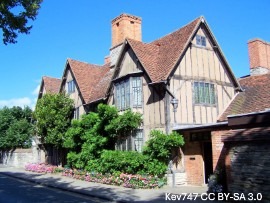
Stratford-upon-Avon home of Shakespeare's daughter is 'At Risk'
Lady Grange’s House repaired on St Kilda
.jpg)
National Trust for Scotland repairs stone cleit with link to famous island resident
Griff Rhys Jones on BBC Radio 4 Today programme
,_Green_Lane,_Derby.jpg)
The Victorian Society’s President unveiled its latest Top Ten Endangered Buildings 2026.
Need a MATE? Book your place now.

IHBC offers free webinars on applying for IHBC accreditation (Full & Associate).
UK Stained Glass Repository finds windows new homes
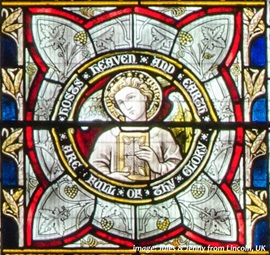
How are stained glass windows are rescued, stored and repurposed?
APPGEBE report sets high aims for quality
'Government must not sacrifice quality in drive to build 1.5m homes'
New measures protect Historic Shipwrecks from heritage crime

Underwater cultural heritage benefits from new HE guidance
How could the City of London skyline look in 6 years' time?

Visualisation shows approved planning applications as completed buildings
National Trust for Scotland calls for VAT cuts
Heritage neglect is encouraged by current policies
IHBC's 'Context' Issue 186 features Industrial Heritage
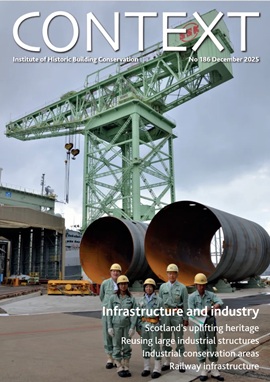
IHBC's members' journal reports on the challenges of conserving infrastructure
Book now for IHBC Annual School 2026

IHBC Annual School is taking place 18-20 June 2026 in Newcastle
RICHeS Research Infrastructure offers ‘Full Access Fund Call’
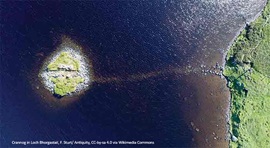
RICHeS offers a ‘Help’ webinar on 11 March
Latest IHBC Issue of Context features Roofing
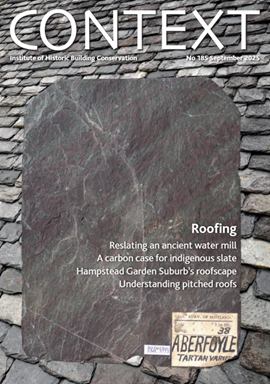
Articles range from slate to pitched roofs, and carbon impact to solar generation to roofscapes
Three reasons not to demolish Edinburgh’s Argyle House

Should 'Edinburgh's ugliest building' be saved?
IHBC’s 2025 Parliamentary Briefing...from Crafts in Crisis to Rubbish Retrofit
IHBC launches research-led ‘5 Commitments to Help Heritage Skills in Conservation’
How RDSAP 10.2 impacts EPC assessments in traditional buildings

Energy performance certificates (EPCs) tell us how energy efficient our buildings are, but the way these certificates are generated has changed.